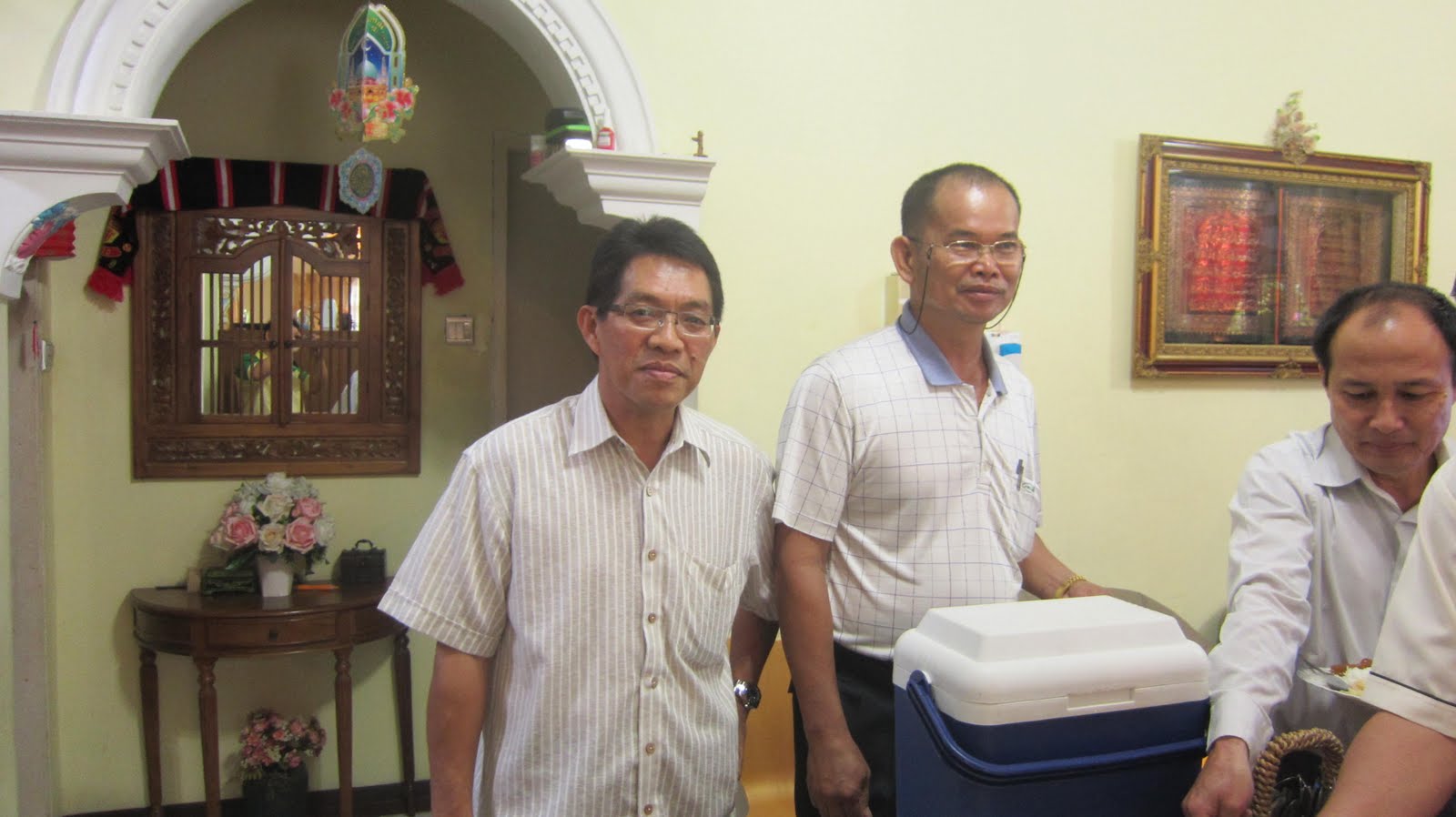
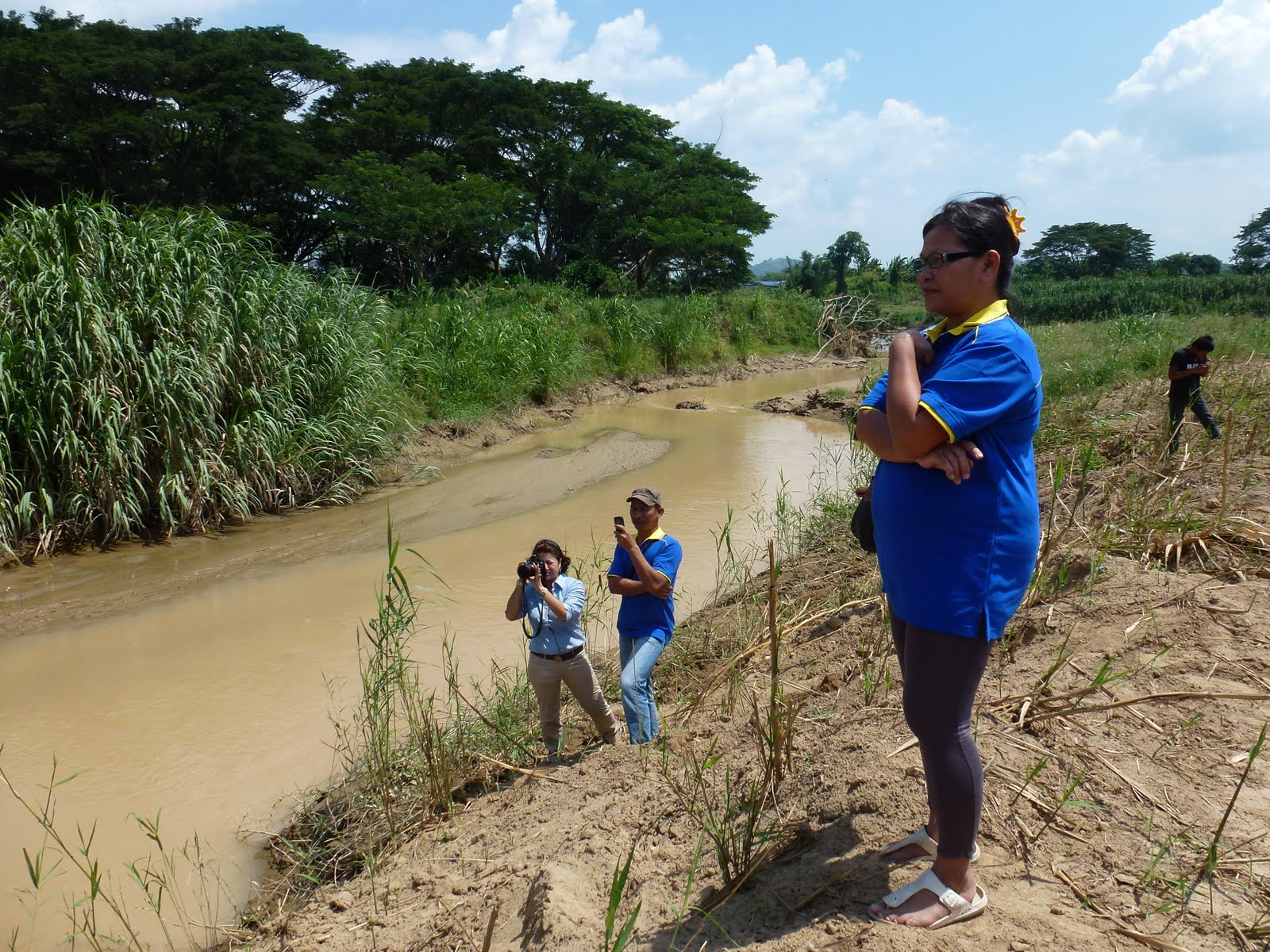
Sunday, September 18, 2011

CIK SOM


SOM Jamin Kualiti Hasil Pertanian Organik

Sejak kebelakangan ini, makanan organik semakin mendapat tempat di kalangan masyarakat. Malah, kewujudan iklan-iklan komersial yang mempromosikan pertanian secara organik juga dapat dilihat di kaca televisyen. Boleh dikatakan, pertanian organik menjadi salah satu gaya hidup masyarakat moden hari ini yang amat mementingkan penjagaan kesihatan dan kelestarian alam sekitar. Namun, tahukah kita, apakah pertanian organik? Perladangan organik adalah satu sistem pengeluaran tanaman yang tidak menggunakan bahan kimia sintetik seperti baja kimia sebatian, racun perosak dan hormon penggalak tumbesaran. Perladangan secara organik memberi tumpuan kepada langkah-langkah melindungi alam sekitar dan memelihara kepelbagaian biologi bagi menghasilkan produk yang berkualiti dan selamat. Ia perlu dilaksanakan mengikut standard supaya kualiti pengeluaran produk organik dapat ditingkatkan. Bagi memastikan hasil yang berkualiti, Jabatan Pertanian membangunkan Skim Organik Malaysia (SOM) untuk mengiktiraf ladang-ladang yang diusahakan secara organik berdasarkan kriteria dan keperluan yang ditetapkan dalam Standard SOM.

Skim ini memberi tumpuan pada aktiviti pengeluaran dan pengendalian termasuk pembungkusan, penyimpanan, pengangkutan dan jualan produk pertanian organik. Standard ini berpandukan pada Malaysian Standard MS 1529:2001 The Production, Processing, Labelling and Marketing of Plant Based Organically Produced Foods. Sijil SOM akan diberikan kepada ladang-ladang yang berjaya mematuhi semua syarat-syarat pensijilan SOM. Sejak 2003 hingga kini, sebanyak 170 ladang telah mendaftar dalam persijilan ini. Bagaimanapun, hanya 28 ladang organik sahaja yang layak menggunakan label organik di pasaran dengan harga premium. Bagi mengelakkan berlakunya penyalahgunaan label organik, kerajaan melalui Kementerian Kesihatan membuat pindaan kepada Peraturan Makanan 1985 yang diwartakan pada 24 Ogos 2009. Pindaan ini menetapkan produk makanan yang hendak dilabel dengan perkataan organik, biologikal, ekologikal, biodinamik mesti mematuhi keperluan pelabelan dalam Malaysian Standard MS 1529:2001 The Production, Processing, Labelling and Marketing of Plant Based Organically Produced Foods. Ini bermakna, mana-mana produk pertanian yang dilabel organik mesti memperoleh sijil SOM. Peraturan ini berkuat kuasa pada 1 Januari tahun depan.

.

Dipetik dari:

http://www.moa.gov.my/web/guest/pertanian1perniagaan

Pertanian Adalah Perniagaan


Pertanian Adalah Perniagaan
Dalam Rancangan Malaysia Kesembilan (RMK-9) Kerajaan telah menguar-uarkan tentang aspek memperkasakan pertanian baru. Ia bukan sahaja merangkumi aspek pertanian komersial dan bioteknologi, malah turut menekankan aspek pertanian sebagai satu perniagaan.
Transformasi ini memerlukan pembudayaan keusahawanan dalam pertanian supaya dapat melahirkan satu generasi usahawan bagi menerajui usaha merevolusikan bidang pengeluaran makanan dalam sektor pertanian.
Kerajaan sentiasa berusaha mencari inisiatif baru dalam membangunkan sektor pertanian dan industri berasaskan tani demi memastikan pembangunan bidang terbabit seiring arus transformasinya. Justeru, pembangunan infrastruktur pertanian juga diberi keutamaan bagi memastikan pengusaha dapat memaksimumkan hasil yang diperoleh dan bergerak ke arah menjadi usahawan tani yang berjaya dan profesional.
Banyak program dan aktiviti dianjurkan bertujuan melahirkan Usahawan Tani supaya mereka menerajui perancangan untuk mengkomersialkan pengeluaran makanan di dalam sektor pertanian bagi menambah produktiviti dan daya saing dalam dunia perniagaan yang kian kompetitif dan global.
Kerajaan mahu supaya golongan petani membuat anjakan paradigma dan menanam dalam minda masing-masing bahawa sektor pertanian harus diuruskan sebagai satu entiti perniagaan. Sesungguhnya, masih belum terlambat untuk anda menceburkan diri dalam bidang yang dianggap satu kaedah menjana pendapatan lumayan. Jadi, apa tunggu lagi. Rebutlah peluang keemasan ini! dipetik dari:

Friday, September 16, 2011

Thursday, September 15, 2011

Tuesday, September 13, 2011

UCAPAN TAKZIAH


UCAPAN TAKZIAH

KEPADA
KELUARGA EN. SUNHAN

DIATAS PEMERGIAN
MENDIANG EN. THIEN SIONG BIN SUNHAN


daripada


YBgh. Tuan M.C. Ismail Salam
Pengarah Jabatan Pertanian Sabah
dan
Warga Jabatan Pertanian Sabah


.

Kau Pergi Jua


Kau Pergi Jua

Kau Pergi Jua

Wajahmu... seindah serinya pelangi yang indah
Seharum mawar putih segar berkembang
Wajahmu mengapa sering terbayang di mataku
Sehingga terbawa di dalam mimpiku

Sayangku
Tahukah kau di dalam hatiku ini
Tersimpan perasaan cinta yang suci
Kau bunga ingin kusunting mu menjadi milikku
Lantas kuabadikan dalam jiwaku

Sayangnya... harapan yang selama ini kubawa
Hancur berkecai musnah jua akhirnya
Semuanya bagaikan sebuah mimpi
Oh... Kau pergi jua
Setelah cintaku kini membara
Belum sempat kucurahkah kasihku
Kau pergi tak kembali

Ingin kusunting mu menjadi milikku
Lantas kuabadikan dalam jiwaku

Cation-Exchange Capacity (CEC)

http://soils.tfrec.wsu.edu/webnutritiongood/soilprops/04CEC.htm

Cation-Exchange Capacity (CEC)

Cation-exchange capacity is defined as the degree to which a soil can adsorb and exchange cations.

Cation-a positively charged ion (NH4+, K+, Ca2+, Fe2+, etc...)

Anion-a negatively charged ion (NO3-, PO42-, SO42-, etc...)

Soil particles and organic matter have negative charges on their surfaces. Mineral cations can adsorb to the negative surface charges or the inorganic and organic soil particles. Once adsorbed, these minerals are not easily lost when the soil is leached by water and they also provide a nutrient reserve available to plant roots.

These minerals can then be replaced or exchanged by other cations (i.e., cation exchange)

Top of page

CEC is highly dependent upon soil texture and organic matter content. In general, the more clay and organic matter in the soil, the higher the CEC. Clay content is important because these small particles have a high ration of surface area to volume. Different types of clays also vary in CEC. Smectites have the highest CEC (80-100 millequivalents 100 g-1), followed by illites (15-40 meq 100 g-1) and kaolinites (3-15 meq 100 g-1).

Examples of CEC values for different soil textures are as follows:

Soil texture

CEC (meq/100g soi)

Sands (light-colored)3-5
Sands (dark-colored)10-20
Loams10-15
Silt loams15-25
Clay and clay loams20-50
Organic soils50-100

In general, the CEC of most soils increases with an increase in soil pH.

Two factors determine the relative proportions of the different cations adsorbed by clays. First, cations are not held equally tight by the soil colloids. When the cations are present in equivalent amounts, the order of strength of adsorption is Al3+ > Ca2+ > Mg2+ > K+ = NH4+ > Na+.

Second, the relative concentrations of the cations in soil solution helps determine the degree of adsorption. Very acid soils will have high concentrations of H+ and Al3+. In neutral to moderately alkaline soils, Ca2+ and Mg2+ dominate. Poorly drained arid soils may adsorb Na in very high quantities.

Top of page

Base Saturation

The proportion of CEC satisfied by basic cations (Ca, Mg, K, and Na) is termed percentage base saturation (BS%). This property is inversely related to soil acidity. As the BS% increases, the pH increases. High base saturation is preferred but not essential for tree fruit production. The availability of nutrient cations such as Ca, Mg, and K to plants increases with increasing BS%.

Base saturation is usually close to 100% in arid region soils. Base saturation below 100% indicates that part of the CEC is occupied by hydrogen and/or aluminum ions. Base saturation above 100% indicates that soluble salts or lime may be present, or that there is a procedural problem with the analysis.

Top of page

CEC and Availability of Nutrients

Exchangeable cations, as mentioned above, may become available to plants. Plant roots also possess cation exchange capacity. Hydrogen ions from the root hairs and microorganisms may replace nutrient cations from the exchange complex on soil colloids. The nutrient cations are then released into the soil solution where they can be taken up by the adsorptive surfaces of roots and soil organisms. They may however, be lost from the system by drainage water.

Additionally, high levels of one nutrient may influence uptake of another (antagonistic relationship). For example, K uptake by plants is limited by high levels of Ca in some soils. High levels of K can in turn, limit Mg uptake even if Mg levels in soil are high.

Top of page

Anion Exchange

In contrast to CEC, AEC is the degree to which a soil can adsorb and exchange anions. AEC increases as soil pH decreases. The pH of most productive soils in the US and Canada is usually too high (exceptions are for volcanic soils) for full development of AEC and thus it generally plays a minor role in supplying plants with anions.

Because the AEC of most agricultural soils is small compared to their CEC, mineral anions such as nitrate (NO3- and Cl-) are repelled by the negative charge on soil colloids. These ions remain mobile in the soil solution and thus are susceptible to leaching.

Top of page

soil

http://en.wikipedia.org/wiki/Soil

Soil forming factors

Soil formation, or pedogenesis, is the combined effect of physical, chemical, biological, and anthropogenic processes on soil parent material. Soil genesis involves processes that develop layers or horizons in the soil profile. These processes involve additions, losses, transformations and translocations of material that compose the soil. Minerals derived from weathered rocks undergo changes that cause the formation of secondary minerals and other compounds that are variably soluble in water, these constituents are moved (translocated) from one area of the soil to other areas by water and animal activity. The alteration and movement of materials within soil causes the formation of distinctive soil horizons.

The weathering of bedrock produces the parent material from which soils form. An example of soil development from bare rock occurs on recent lava flows in warm regions under heavy and very frequent rainfall. In such climates, plants become established very quickly on basalticlava, even though there is very little organic material. The plants are supported by the porous rock as it is filled with nutrient-bearing water which carries, for example, dissolved minerals and guano. The developing plant roots, themselves or associated with mycorrhizal fungi,[9]gradually break up the porous lava and organic matter soon accumulates.

But even before it does, the predominantly porous broken lava in which the plant roots grow can be considered a soil. How the soil "life" cycle proceeds is influenced by at least five classic soil forming factors that are dynamically intertwined in shaping the way soil is developed, they include: parent material, regional climate, topography, biotic potential and the passage of time.[10]

[edit]Parent material

The material from which soil forms is called parent material. It includes: weathered primary bedrock; secondary material transported from other locations, e.g. colluvium and alluvium; deposits that are already present but mixed or altered in other ways - old soil formations, organic material including peat or alpine humus; and anthropogenic materials, like landfill or mine waste.[11] Few soils form directly from the breakdown of the underlying rocks they develop on. These soils are often called “residual soils”, and have the same general chemistry as their parent rocks. Most soils derive from materials that have been transported from other locations by wind, water and gravity.[12] Some of these materials may have moved many miles or only a few feet. Windblown material called loess is common in the Midwest of North America and in CentralAsia and other locations. Glacial till is a component of many soils in the northern and southern latitudes and those formed near large mountains; till is the product of glacial ice moving over the ground. The ice can break rock and larger stones into smaller pieces, it also can sort material into different sizes. As glacial ice melts, the melt water also moves and sorts material, and deposits it varying distances from its origin. The deeper sections of the soil profile may have materials that are relatively unchanged from when they were deposited by water, ice or wind.

Weathering is the first stage in the transforming of parent material into soil material. In soils forming from bedrock, a thick layer of weathered material called saprolite may form. Saprolite is the result of weathering processes that include: hydrolysis (the replacement of a mineral’s cations with hydrogen ions), chelation from organic compounds, hydration (the absorption of water by minerals), solution of minerals by water, and physical processes that include freezing and thawing or wetting and drying.[11] The mineralogical and chemical composition of the primary bedrock material, plus physical features, including grain size and degree of consolidation, plus the rate and type of weathering, transforms it into different soil materials.

[edit]Climate

Soil formation greatly depends on the climate, and soils from different climate zones show distinctive characteristics.[13] Temperature and moisture affect weathering and leaching. Wind moves sand and other particles, especially in arid regions where there is little plant cover. The type and amount of precipitation influence soil formation by affecting the movement of ions and particles through the soil, aiding in the development of different soil profiles. Seasonal and daily temperature fluctuations affect the effectiveness of water in weathering parent rock material and affect soil dynamics. The cycle of freezing and thawing is an effective mechanism to break up rocks and other consolidated materials. Temperature and precipitation rates affect biological activity, rates of chemical reactions and types of vegetation cover.

[edit]Biological factors

Plants, animals, fungi, bacteria and humans affect soil formation (see soil biomantle and stonelayer). Animals and micro-organisms mix soils to form burrows and pores allowing moisture and gases to seep into deeper layers. In the same way, plant roots open channels in the soils, especially plants with deep taproots which can penetrate many meters through the different soil layers to bring up nutrients from deeper in the soil. Plants with fibrous roots that spread out near the soil surface, have roots that are easily decomposed, adding organic matter. Micro-organisms, including fungi and bacteria, affect chemical exchanges between roots and soil and act as a reserve of nutrients. Humans can impact soil formation by removing vegetation cover; this removal promotes erosion. They can also mix the different soil layers, restarting the soil formation process as less-weathered material is mixed with and diluting the more developed upper layers. Some soils may contain up to one million species of microbes per gram, most of those species being unknown, making soil the most abundant ecosystemon Earth.[14]

Vegetation impacts soils in numerous ways. It can prevent erosion caused by the impact of rain or surface runoff. Plants shade soils, keeping them cooler and slowing evaporation of soil moisture, or plants by way of transpiration can cause soils to lose moisture. Plants can form new chemicals which can break down or build up soil particles. The type and amount of vegetation depends on climate, land form topography, soil characteristics, and biological factors. Soil factors such as density, depth, chemistry, pH, temperature and moisture greatly affect the type of plants that can grow in a given location. Dead plants and dropped leaves and stems fall to the surface of the soil and decompose. There, organisms feed on them and mix the organic material with the upper soil layers; these added organic compounds become part of the soil formation process.

[edit]Time

Time is a factor in the interactions of all the above factors as they develop soil. Over time, soils evolve features dependent on the other forming factors, and soil formation is a time-responsive process dependent on how the other factors interplay with each other. Soil is always changing.It takes about 800 to 1000 years for a 2.5 cm thick layer of fertile soil to be formed in nature. For example, recently-deposited material from a flood exhibits no soil development because there has not been enough time for soil-forming activities. The soil surface is buried, and the formation process begins again for this soil. The long periods over which change occurs and its multiple influences mean that simple soils are rare, resulting in the formation of soil horizons. While soil can achieve relative stability in properties for extended periods, the soil life cycle ultimately ends in soil conditions that leave it vulnerable to erosion. Despite the inevitability of soil retrogression and degradation, most soil cycles are long and productive.

Soil-forming factors continue to affect soils during their existence, even on “stable” landscapes that are long-enduring, some for millions of years. Materials are deposited on top and materials are blown or washed away from the surface. With additions, removals and alterations, soils are always subject to new conditions. Whether these are slow or rapid changes depend on climate, landscape position and biological activity.

[edit]

Monday, September 12, 2011

Thien.... suasana Terpilu

Tn. Idrus Shafee di perkarangan Jabatan Forensik


Dipetik:

http://www.dailyexpress.com.my/news.cfm?NewsID=79166

Penampang: A 28-year-old clerk was killed when his Kancil skidded and plunged into a deep ravine along Jalan Bukit Padang on Saturday night.

The deceased, Thien Siong Sunhan, a G17 clerk with the Agriculture Department here, attended a wedding at 2pm on Saturday, said his friend, Marcellus.

After the wedding, he said they went to Country Heights for a drink but before the food arrived Thien's sister called asking him to fetch her.

However, he never returned, said Marcellus.

The victim, who lived in Bahang apartment, leaves behind a wife who is teaching in Kuching, Sarawak.

Another friend, Constantine, 25, said they looked for the victim at his home at 9am on Sunday, but Thien was not at home.

He said they received news of an accident at the downhill section of Jalan Bukit Padang and rushed to the scene.

Fire and Rescue Department extricated Thien's body from the Kancil wreckage at about 10.40am on Sunday.

Kota Kinabalu traffic police chief, DSP Peter Umbuas, appealed to witnesses of the accident to come forward.

Sergeant Mallanus and Inspector Khairi Shah Kaderan were at the scene.


Sunday, September 11, 2011

Rumah Terbuka Aidilfitri Tuan Pengarah


Yg. Berbahagia Tuan M.C. Ismail Salam Pengarah Pertanian Sabah bersama tetamu yang hadir.


THIEN SIONG MENINGGAL DUNIA

En. Thien Siong, kakitangan baru (G17) di Seksyen Quarantin telah meninggal dunia pada 10 Sept 2011.

SAMBUTAN AIDILFITRI IDRUS SHAFEE

Tn. Idrus Shafee meraihkan tetamunya

Kehadiran M.C. Ismail Salam, Pengarah Pertanian menceriahkan lagi suasana.


ceria...


Friday, September 9, 2011

Mesyuarat Ketua2 Seksyen Penyelidikan

Yg. Berbahagia Pn. Julia Hj. Lamdin, Timbalan Pengarah Pertanian mempengerusikan Mesyuarat Ketua-Ketua Seksyen, Bahagian Penyelidikan dan Pembangunan Teknologi, Kali Ketiga Tahun 2011 (03/2011)


Terus Berjuang....

Sentiasa Progresif....


Ahli-ahli Mesyuarat

Wednesday, September 7, 2011

SALAM AIDILFITRI

SALAM AIDILFIRI

UNTUK
SEMUA AHLI KELAB PERTANIAN
DAN
WARGA JABATAN PERTANIAN SABAH

DARI
Yang Berusaha En. Shahrin Usidi
Pengerusi Kelab Pertanian Tuaran

&
MAJLIS TERTINGGI
KELAB PERTANIAN TUARAN

Tuesday, September 6, 2011

LAWATAN KE TAPAK PROJEK TERNAKAN IKAN AIR TAWAR PANJUT TUARAN


Kawasan Projek (Kg. Panjut Tuaran)


YB Datuk Jahid Jahim, Pembantu Menteri Belia dan Sukan bersalaman dengan Pn. Julia Lamdin Timbalan Pengarah Pertanian dan En. William Wong, Ketua Penolong pengarah ARC Tuaran.

Sunday, September 4, 2011

SALAM AIDILFITRI


Yg. Bbgh. Tuan Idrus Shafee
Presiden Kelab Pertanian Sabah
merangkap
Presiden SASS (Society of Agricultural Scientists Sabah)

MENGUCAPKAN

SELAMAT HARI RAYA AIDILFITRI
kepada
WARGA JABATAN PERTANIAN SABAH

Monday, August 22, 2011

KAMERA BARU

Majlis Penyampaian Kamera Baru yang disempurnakan oleh Tn. Shahrin Usidi, Pengerusi Kelab Pertanian Tuaran.


Sunday, August 21, 2011

Ditebuk Tupai


Perjuangan adalah analogi sebiji durian

Durian sedap
durian manis
durian kegilaan orang
semua gila... gila makan durian

perjuangan juga seumpama durian
.... durian ranum yang sempurna
terus ligat berlari
kejayaan demi kejayaan
mega bagai sang helang di angkasa
semua wawasan tergapai

godobog!!!!!
jatuh
satu biji durian yang ditebuk tupai
... aku baru sedar
perjuangan tidak semuda.... duhujung jari

adakanya perjuangan adalah tragis
pesimistik
terbuang
onak duri bertaburan
badai menggulung bagia Tsunami
retak kaca bertempiaran
apokalip yang melankolik

humanifikasi
soldadu tegap terbaring longlai
terkujur rapuh
puing-puing kehancuran yang nostalgik
pepasir pantai yang tak bergigi

....kekadang
perjuangan adalah
umpama durian
.... durian yang ditebuk tupaiiiiiiiiiiiiiiiiiiiiiiiiiiiiiiiiiiiiiiiiiiiiiiiiiiiiiiiiiiiiiiiiiiiiiiiiiiiiiii!!!!

Ya Maha Kuasa
kalau Lailatulkadar malam ini

aminkan diriku mendapat
duian yang SEMPURNA.

amin!!!